
Signs Your Septic System Needs Repair or Replacement Before Winter
Slow drains, soggy patches, and sewer odors aren't random, they're your septic system asking for help before winter makes it worse.
Every fall, homeowners across Shapleigh, Saco, and Sanford face the same quiet deadline: get septic problems fixed before the ground freezes, or wait until spring thaw to find out how much worse they've gotten. Whites Performance Machines has seen firsthand how a small, ignorable issue in October can turn into a frozen, unusable system by January. Knowing the warning signs now, and understanding when a repair is enough versus when a full septic system replacement is the smarter call can save homeowners thousands of dollars and a very unpleasant winter.
What are the early warning signs of septic trouble?
Septic systems rarely fail all at once. They send signals for weeks, sometimes months, before a full breakdown. The challenge is that most of those signals look like minor household annoyances rather than a costly plumbing emergency in the making. Slow-draining sinks and tubs, especially when it's happening in more than one fixture at the same time, are often one of the first clues that a tank is reaching capacity, or a leach field is struggling to absorb effluent.
Odor is another early tell. A properly functioning septic system shouldn't announce itself. If there's a persistent sewage smell near the tank, the leach field, or even inside the house around drains, it's worth taking seriously rather than masking it and hoping it passes. Outside, homeowners should watch the ground itself: an unusually green, lush patch of grass over the leach field, especially during a dry stretch when the rest of the lawn is browning is a classic sign that effluent is surfacing rather than draining properly below ground.
Common warning signs to watch for include:
- Slow drains in multiple sinks, tubs, or toilets at once.
- Gurgling sounds coming from pipes after flushing or running water.
- Sewage odor near the tank, leach field, or inside the home.
- Standing water or unusually soggy ground over the septic system.
- Bright green, fast-growing grass concentrated over the leach field.
- A septic tank or system older than 20-25 years with no recent service history.
Why does timing matter so much in Maine?
Maine's climate adds a layer of urgency that homeowners in milder states don't have to think about. Once the ground freezes, excavation becomes far more difficult, slower, and more expensive. Frozen soil resists digging, and emergency winter repairs often require extra equipment and labor just to break through the frost line before the actual repair work can even begin. A septic problem that would have been a straightforward afternoon fix in September can turn into a multi-day, weather-dependent project in January.
There's also the practical reality of daily life. A septic backup in the middle of a Maine winter isn't just inconvenient, it can leave a household without functioning plumbing for days while equipment, materials, and scheduling all have to work around snow and ice. Addressing warning signs in the fall, while the ground is still workable and contractors have more flexibility in their schedules, is one of the simplest ways homeowners across our service area. Shapleigh, Saco, Sanford, Biddeford, Kennebunk, and Wells can avoid a genuine emergency later on.
Repair or replacement, how do you know which one you need?
Not every septic issue means the whole system needs to come out. A cracked pipe, a failing baffle, or a tank that simply needs pumping are all common, fixable problems that don't require touching the leach field or the tank itself. The deciding factors usually come down to the age of the system, how widespread the damage is, and whether the soil around the leach field can still properly filter effluent.
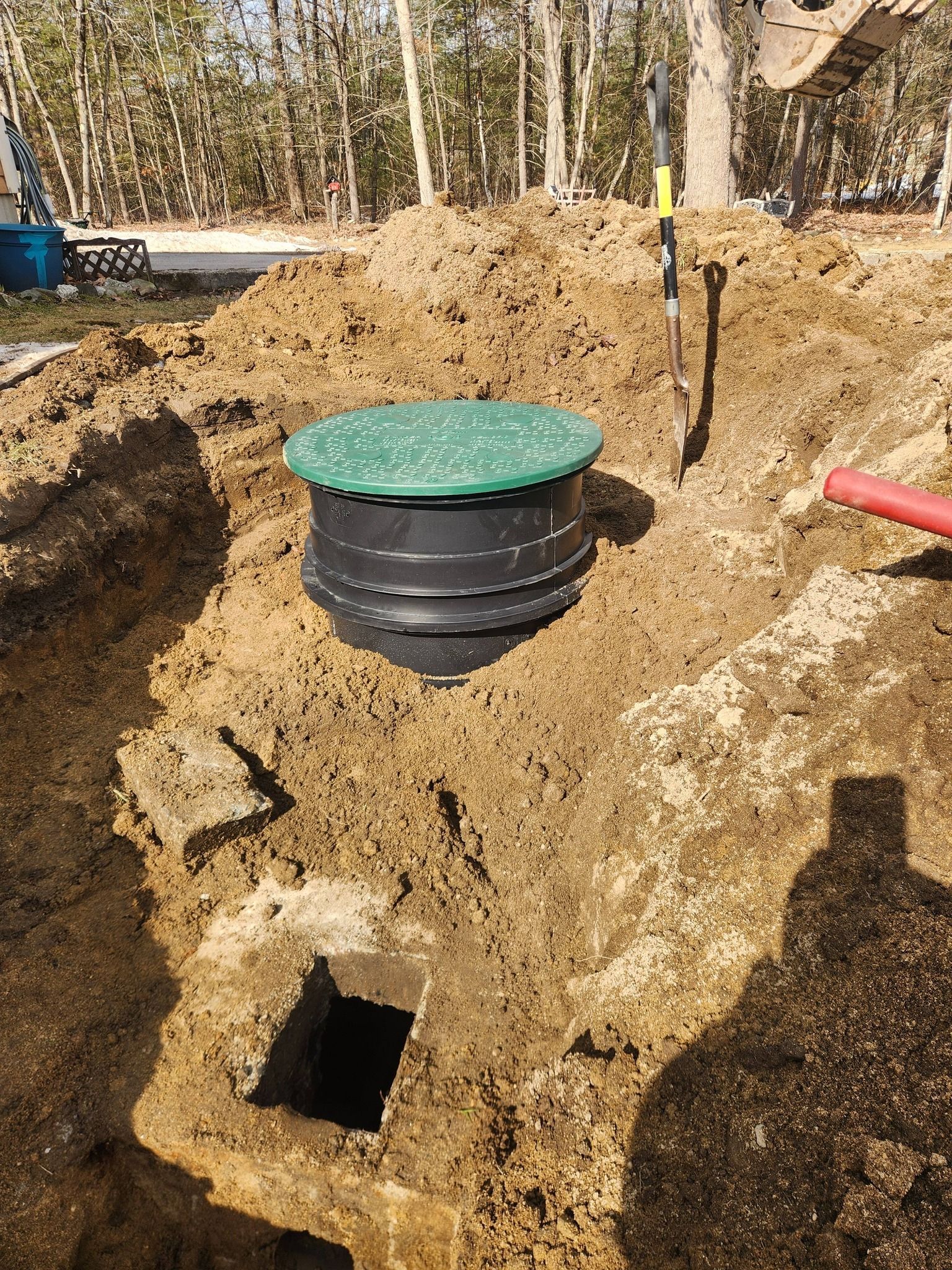
An older system, particularly one original to a home built decades ago, is a different conversation. Older concrete tanks can crack or settle over time, and leach fields eventually reach the end of their absorption life regardless of how well they've been maintained. In those cases, a targeted repair often just delays a more expensive failure a year or two down the road, and a full replacement ends up being the more cost-effective decision. This is a common situation for homeowners seeking septic line repair in Waterboro and surrounding towns, where many properties still run on the original system installed with the home.
What does a professional septic evaluation involve?
The only way to know for certain which path is right is a proper evaluation, not a guess based on symptoms alone. A thorough inspection starts with pumping and visually inspecting the tank itself, checking for cracks, corrosion, or structural settling. From there, the leach field gets assessed for saturation, checking whether the soil is still capable of absorbing and filtering effluent at a healthy rate.
Site conditions matter just as much as the equipment in the ground. Maine's soil varies significantly from town to town, and a system's design has to account for the specific percolation rate of the property it sits on. A professional evaluation looks at drainage patterns, proximity to wells or waterways, and how the system has held up against the property's actual usage over time, not just its age on paper.
Key takeaways before the ground freezes
Fall is the window to act on septic warning signs, not the following spring. A few things worth keeping in mind:
- Don't ignore slow drains or odors, they're usually early signs, not one-off flukes.
- Watch the leach field, not just the tank, soggy or overly green patches are a strong indicator of trouble.
- Get ahead of frozen ground. Repairs and replacements are faster, cheaper, and less disruptive before winter sets in.
- Know your system's age. Systems over 20-25 years old are more likely to need replacement than repair.
- Have it evaluated by a professional before deciding between a repair and a full replacement.
Frequently asked questions
How often should a septic tank be pumped in Maine?
Most residential septic tanks need pumping every 3-5 years, though households with a garbage disposal or a larger family may need it more often. Regular pumping is one of the cheapest ways to avoid an emergency repair.
Can I repair a septic system myself?
Minor fixture issues can sometimes be handled by a homeowner, but tank, pipe, or leach field repairs involve excavation, environmental regulations, and permitting that require a licensed professional. A DIY attempt on the system itself often ends up costing more to fix correctly.
How long does a septic system replacement take?
A straightforward replacement typically takes a few days from excavation to backfill, weather and soil conditions permitting. Complex sites or those requiring a full leach field redesign can take longer.
What's the average lifespan of a septic system?
With regular pumping and care, a well-maintained septic system typically lasts 20-30 years. Tanks and leach fields that are original to an older home are the most likely to be nearing the end of their service life.
If you're noticing any of these warning signs on your property, don't wait for a winter emergency to find out how serious it is. Whites Performance Machines provides septic evaluations, repairs, and full system installs or replacements throughout Shapleigh, Saco, Sanford, Biddeford, Kennebunk, Wells, and the surrounding Southern Maine communities. Contact us today for a free evaluation and get your system squared away before the ground freezes.
Recent Posts